
The African Continental Free Trade Area (AfCFTA) represents a significant step forward for intra-African trade, and its impact will be particularly notable for the fish canning sector. With Africa accounting for 42% of Moroccan exports in this industry, the agreement opens up promising opportunities for UNICOP members. Through four key questions, we will highlight the main implications for the fish canning industry.
- Which countries are members of the AfCFTA? Under the AfCFTA agreement, only the State Parties (those who have ratified the agreement) are affected by tariff liberalization. Key markets for our sector, such as Ghana, Benin, Nigeria, Gabon, and Guinea, have already ratified the agreement, and their customs tariffs could be reduced or eliminated.
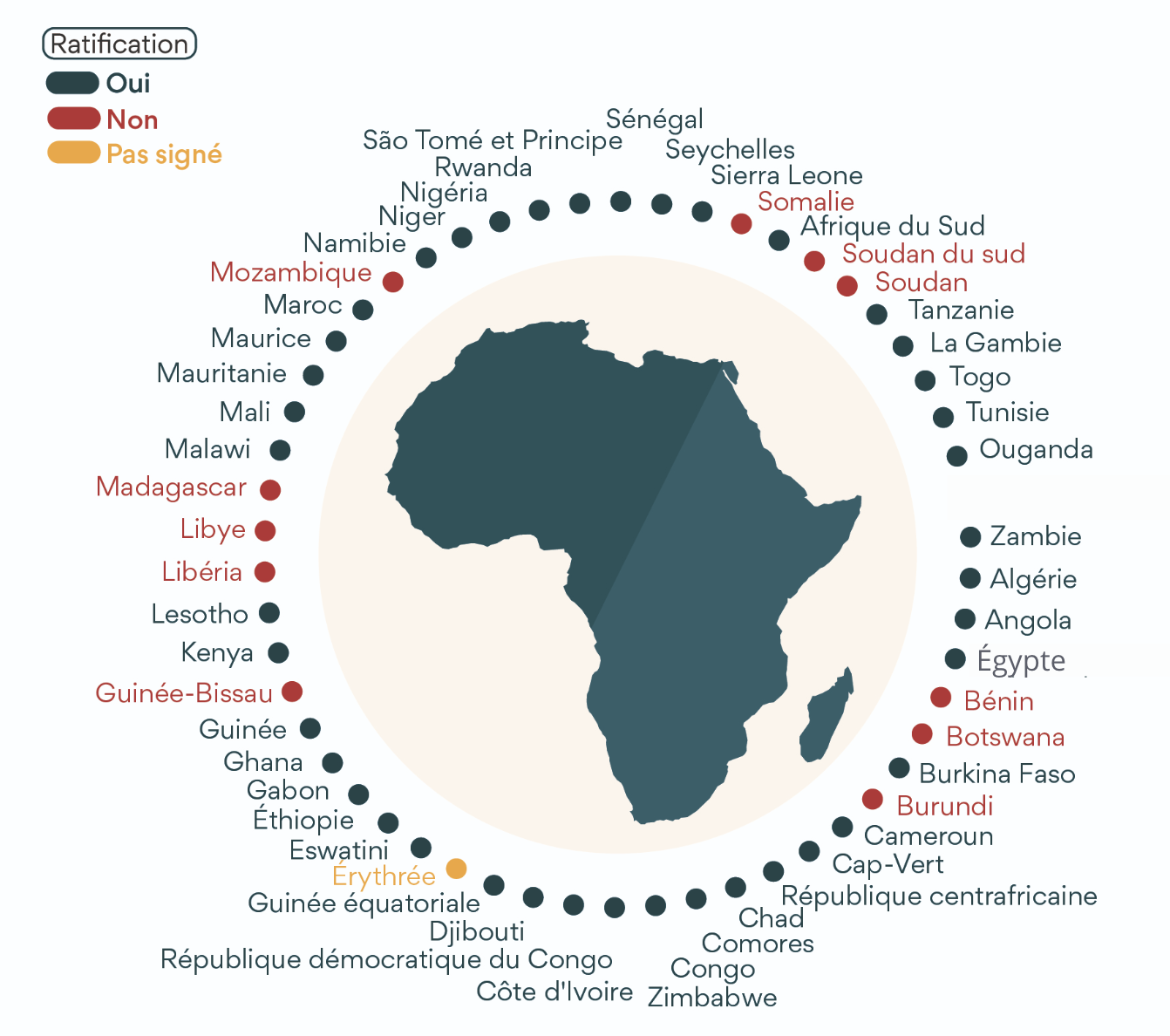
- When does the tariff dismantling start? The dismantling began on January 1, 2021, the operational start date, regardless of when a country signed and ratified the agreement. The reference customs tariff used for dismantling is that of May 30, 2019.
- What are the rules of origin applicable to the fish canning sector? For customs code 16.04, relevant to our industry, the value of all non-originating materials used must not exceed 60% of the ex-factory price of the product for five years. After this period, materials from Chapter 3 (Fish, mollusks, and other aquatic invertebrates) must be entirely obtained.
- How can one determine the tariff dismantling schedules by market? The African Union has provided companies with a tool: etariff.au-afcfta.org, which allows users to determine the tariff dismantling schedules by country and product. Simply enter the exporting country (Morocco), the importing country (e.g., the Democratic Republic of Congo), and the HS code related to fish canning (160413), and the tool will display all relevant information.
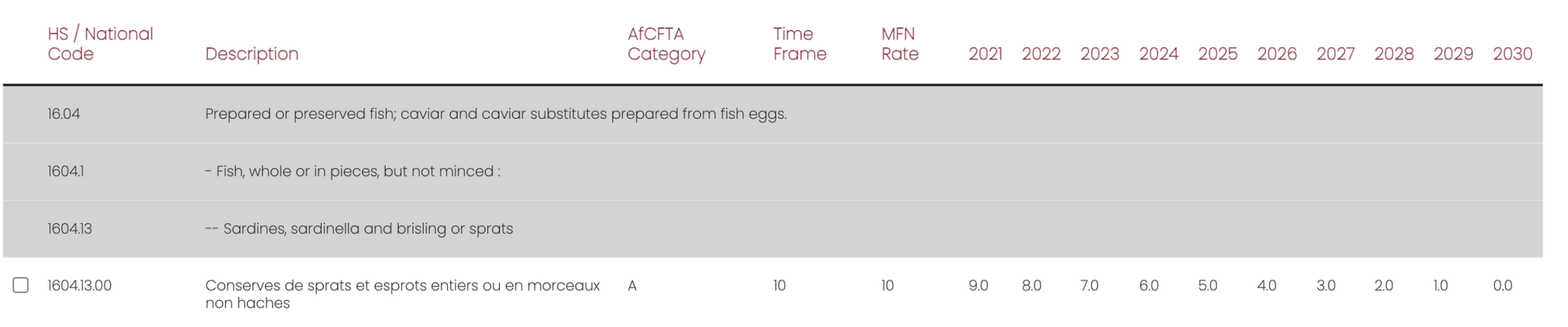
For example, the reference rate for an export from Morocco to the Democratic Republic of Congo is 10%. It is to be dismantled over 10 years, starting from January 1, 2021. The current rate applied to our industry under the AfCFTA is 6%, and it will gradually decrease until reaching 0% by January 1, 2030.